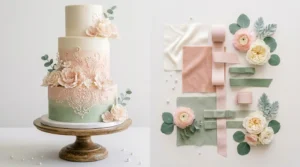
TL;DR: The best wedding desserts for tropical and coastal Miami weddings are heat-resistant, humidity-friendly, and infused with local flavor—think coconut, passionfruit, guava, and citrus. Chilled plated desserts, individually portioned treats, and climate-conscious display setups hold their shape and taste better outdoors than traditional tiered buttercream cakes, especially near the water.
Miami weddings carry a particular kind of magic—turquoise water, salt-kissed breezes, golden light that seems to linger just a little longer at sunset. But that same beauty comes with a practical challenge for dessert tables: heat and humidity that can soften buttercream, wilt delicate sugar work, and turn a beautifully styled spread into a melting mess within the hour.
For brides and wedding planners designing a tropical or coastal celebration, the dessert table deserves the same thoughtful consideration as the florals or the lighting plan. The good news is that Miami’s climate doesn’t limit your options—it simply redirects them toward flavors, formats, and presentation styles that were practically made for oceanfront celebration. Below, we explore how to build a dessert experience that stays beautiful, delicious, and structurally sound from cocktail hour through the last dance.
What makes a wedding dessert “heat-resistant” for a Miami wedding?
A heat-resistant wedding dessert is one built to maintain its shape, texture, and flavor in high temperatures and humidity, typically through stable fillings, firmer icing techniques, and individual portioning rather than large exposed cake surfaces.
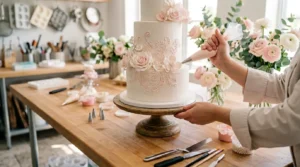
Traditional American buttercream, delicate macarons left uncovered, and whipped cream frostings are the most vulnerable to Miami’s climate. Swiss meringue buttercream, ganache-based finishes, and fondant exteriors tend to hold up far better because they’re more stable at warmer temperatures. Artisan pastry chefs working in South Florida have spent years refining recipes specifically to withstand coastal humidity, so working with a local specialist—rather than importing a design from a cooler climate—often yields a more reliable result.
Which dessert formats work best for outdoor and waterfront venues?
Individually portioned desserts—mini tarts, plated panna cotta, dessert shooters, and petite cakes—tend to outperform large shared desserts at outdoor and waterfront Miami weddings because they spend less time exposed to heat before being served.
Consider these formats for your reception:
- Dessert shooters in sealed glass jars : Layered parfaits of coconut cream, passionfruit curd, or key lime mousse travel well and stay fresh longer than open displays
- Individually plated courses: A seated dessert course allows for precise timing, so treats are served chilled rather than sitting out under tent lighting for hours.
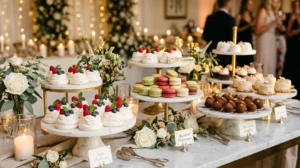
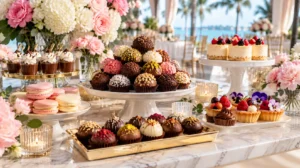
- Mini tart and pastry towers: Smaller footprints mean less surface area exposed to ambient heat, and they photograph beautifully on tiered stands.
- Dual-purpose cutting cakes : : Many Miami couples now opt for a smaller display cake for photos and cutting, paired with a larger dessert table of individually portioned treats for guests—reducing the risk of a full-sized cake softening in the open air.
What flavors feel distinctly “Miami” for a tropical wedding dessert menu?
Coconut, guava, passionfruit, mango, key lime, and citrus are the flavor profiles most associated with tropical and coastal Miami weddings, often paired with rum, espresso, or dulce de leche for a sophisticated, locally rooted dessert menu.
These flavors do double duty: they evoke the destination itself, and many hold their structural integrity better in heat than cream-heavy, butter-forward flavor profiles. A few ideas worth exploring with your pastry artisan:
- Guava and cream cheese pastelitos, reimagined in petite, elegant form for a plated dessert course
- Key lime tartlets: with a toasted meringue or chocolate shell for added heat resistance.
- Coconut and passionfruit layer cake, , finished in stabilized buttercream or ganache.
- Cuban-inspired espresso and dulce de leche bites, a nod to Miami’s rich culinary heritage.
- Mango and rum-infused petit fours, offering a celebratory, adult-leaning flavor note
Pairing these flavors with your wedding’s broader design palette—rather than choosing them in isolation—helps the dessert table feel like a natural extension of the rest of your celebration, not an afterthought.
How should couples handle dessert display and timing near the water?
Couples hosting waterfront or beachfront Miami weddings should prioritize shaded or air-conditioned display areas, delay dessert setup until closer to service time, and work with their caterer or planner to stagger timing so desserts aren’t exposed to direct sun or salt air for extended periods.
A few logistical considerations worth discussing with your wedding planner:
- Shade and airflow: Position the dessert table under a tent, pergola, or indoor transition space rather than direct sunlight, and ensure there’s airflow to prevent condensation buildup.
- Delayed setup : Rather than styling the full dessert table hours before guests arrive, coordinate with your caterer to bring desserts out closer to the reception’s dessert hour.
- Chilled display elements:, Some Miami vendors use subtly chilled display surfaces or ice-lined tiers beneath linens to help maintain temperature without compromising the aesthetic.
- Backup planning: Ask your dessert artisan what their contingency plan is if temperatures run higher than expected on the wedding day—a sign of real coastal event experience.
How can couples create a luxury dessert presentation despite climate constraints?
Luxury dessert presentation in a tropical Miami wedding comes from intentional styling—gold-rimmed stands, tropical floral accents, and cohesive color palettes—paired with climate-smart formats, proving that heat-resistant choices and elevated aesthetics aren’t mutually exclusive.
Think gilded tiered stands holding individually wrapped confections, a dessert table framed by monstera leaves and orchids, or a dramatic ice-carved centerpiece surrounded by petite tropical tarts. Pastry artisans like Chef Antonio Bachour, whose work spans Miami and international markets, have shown that refined technique and bold tropical flavor can coexist beautifully—proof that climate-conscious doesn’t mean compromise.
Your dessert table can still feel like a showstopper. It simply requires a design philosophy built around the realities of the location, rather than one borrowed from a cooler climate and adapted after the fact.
Bringing it all together for your Miami wedding day
A tropical or coastal Miami wedding deserves a dessert experience as vibrant and well-considered as the setting itself. By choosing heat-resistant techniques, embracing locally inspired flavors like guava, coconut, and passionfruit, and working closely with a pastry artisan who understands South Florida’s climate, couples can create a dessert table that’s as structurally sound as it is unforgettable.
If you’re in the early stages of planning, start the conversation with your caterer or dessert artisan as soon as your venue is confirmed. Climate-conscious dessert design often requires more lead time for recipe testing and tasting than a standard cake order, so building it into your timeline early gives your vendor room to craft something truly tailored to your celebration.
Frequently asked questions
What is the best wedding cake alternative for a hot, humid Miami wedding?
Individually plated desserts or a small display cake paired with a dessert table of mini tarts, shooters, or petit fours tend to perform better than a full-sized tiered cake in Miami’s heat and humidity.
How far in advance should couples book a dessert artisan for a Miami wedding?
Most couples should plan to book their dessert vendor six to nine months in advance, allowing time for tastings, custom flavor development, and coordination around venue-specific logistics like shade and timing.
Are fondant or buttercream better for outdoor Miami weddings?
Fondant and stabilized buttercreams, such as Swiss meringue buttercream, generally hold up better in heat than traditional American buttercream or whipped cream finishes, making them more reliable choices for outdoor coastal receptions.
What tropical flavors work well for guests who prefer classic wedding dessert flavors?
Many Miami dessert artisans offer hybrid options, like a classic vanilla or chocolate base paired with a guava or passionfruit filling, giving traditional flavor lovers a taste of the tropical setting without straying too far from familiar profiles.
Does a waterfront venue require a different dessert setup than an inland Miami venue?
Yes. Waterfront venues typically experience more direct sun, wind, and salt air, so dessert tables in these locations benefit from additional shade, delayed setup timing, and more secure packaging or covering compared to inland or indoor venues.